for brothers and sisters,
day-to-day life can be joyful, confusing, rewarding, and scary - sometimes, all at the same time!
The below resources provide insight into these emotions and downloadable tools to help all our children feel seen, heard, and loved.
changing family dynamics
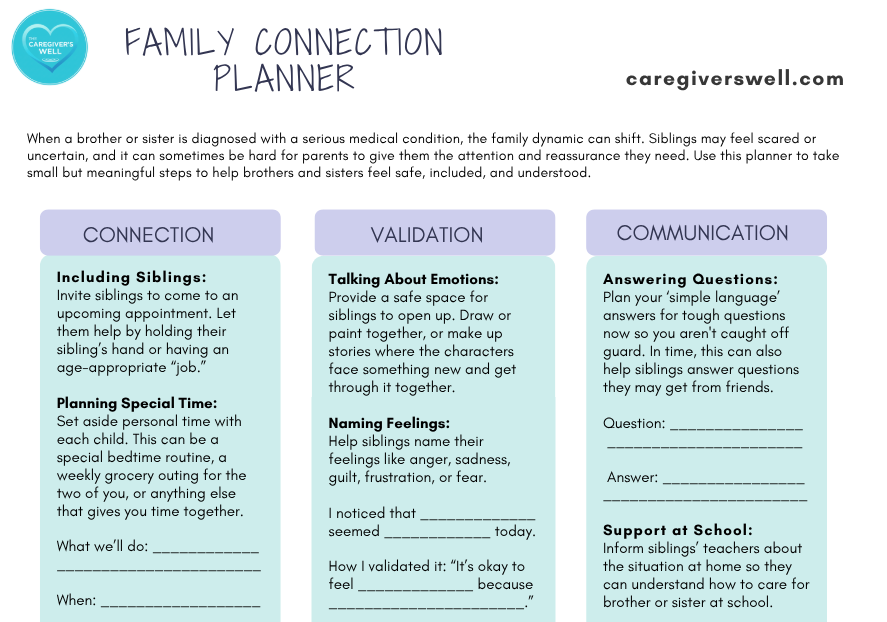
When a brother or sister is diagnosed with a serious medical condition, the family dynamic can shift. Siblings may feel scared or uncertain, and it can sometimes be hard for parents to give them the attention and reassurance they need.
Our Family Connection Planner can help you take small but meaningful steps to help young brothers and sisters feel safe, included, and understood.

communicating with teachers
Letting siblings’ teachers know about the situation at home can help them understand how to care for siblings at school.
It also gives them a heads up should a sibling ask a question or make a related comment in class.
Our teacher email template can give you an idea where to start. Download and customize it for your family’s situation and needs.
when siblings come to appointments
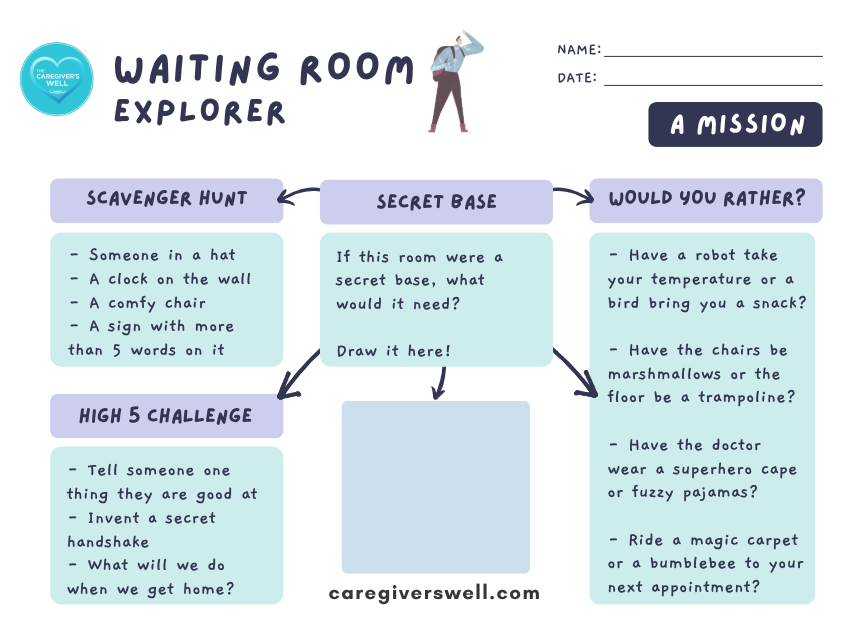
Doctor’s appointments and hospital visits can feel long and sometimes scary. Our Waiting Room Explorer activity sheet can help your children pass the time together while waiting.
It’s also a great way to help young brothers and sisters feel included!
100 ways to help siblings feel special
The Sibling Support Project asked adult brothers and sisters of people with special health care needs: “When you were younger, what did your parents, family members, and service providers do to make you feel special and let you know they cared?”
Here are 100 of their ideas.
interacting with those who “get it”
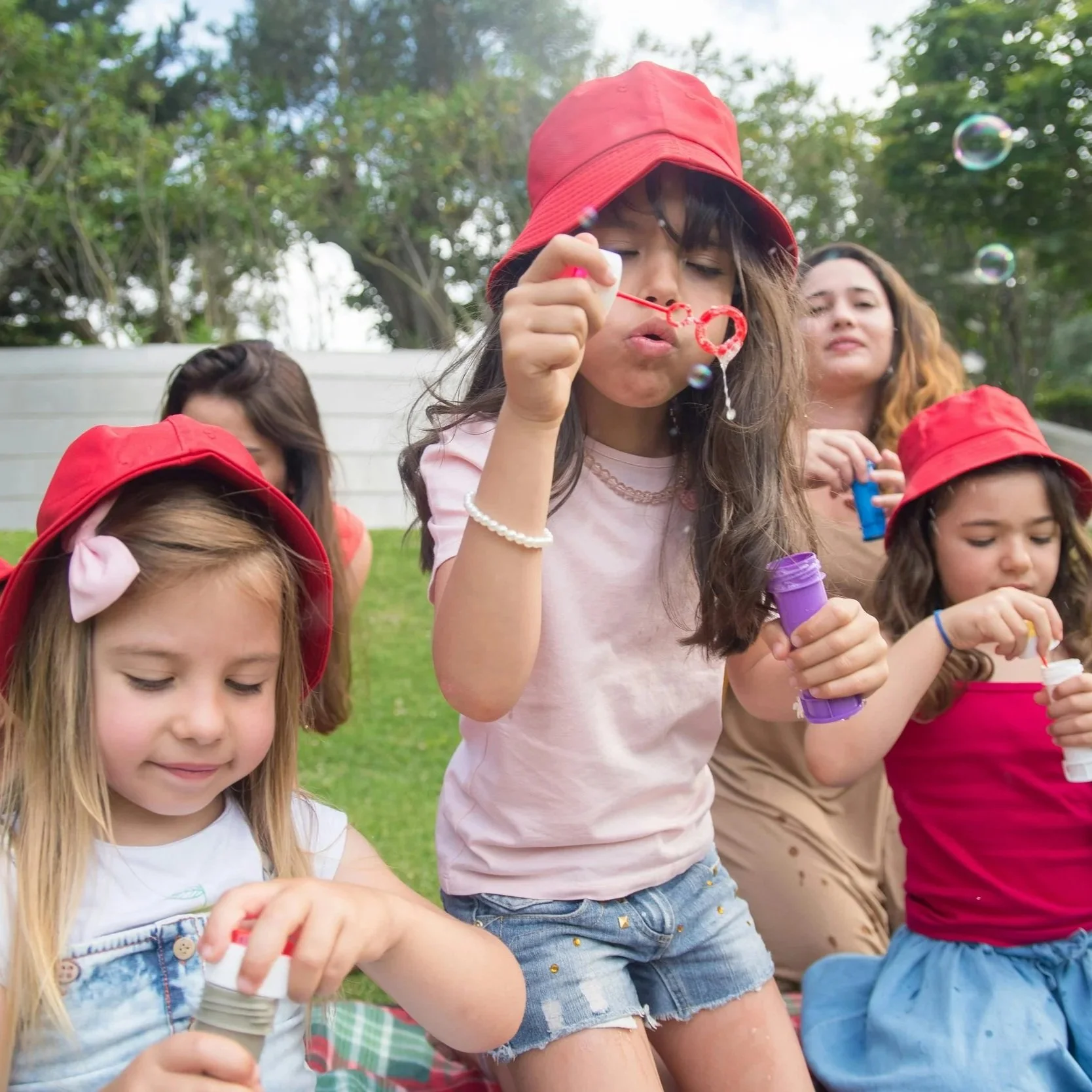
For years, the Sibling Support Project has helped local communities start Sibshops — lively peer support groups for school-age brothers and sisters of kids with disabilities and health concerns.
Sibshops are opportunities for brothers and sisters to play games; talk about the good and not-so-good parts of having a sibling with special health care needs; and interact with others who “get it.”